


Applications
-
 Application in the field ofWarehouse and logistics
 -
 Application in the field ofFood Packing
 -
 Application in the field ofBiodegradable
 -
 Application in the field ofbuilding materials integated packing
 -
 Application in the field ofpaper industry
 -
 Application in the field ofHotel Industry
 -
 Application in the field ofauto parts packing
 -
 Application in the field ofApplications
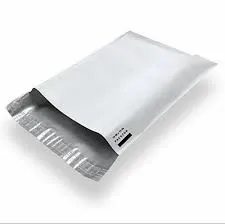
printed poly mailer bags
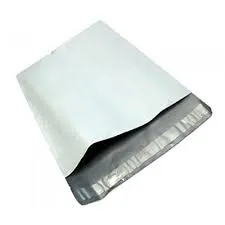
A Field Guide to poly mailer bags in 2025 If you ship anything soft, flat, or non-fragile, you already know the magic of poly mailer bags . Lightweight, tough, and surprisingly brandable. I’ve toured lines that blow film at dawn and print vivid artwork by lunch—then dispatch pallets by nightfall. It’s a small industry that moves fast, and, to be honest, the details matter more than most people think. What’s trending now Post-consumer recycled (PCR) content: 30–70% is becoming the sweet spot for sustainability and strength. Mono-material LDPE for store drop-off or curbside (where available) recycling; clear labeling per ISO 14021. Bolder branding: matte + soft-touch films, high-contrast inks, QR-coded returns. Testing up, damage rates down—more e-comm teams are adopting ISTA 3A and 6-Amazon routines. Product snapshot: Mailing Bag / Poly Mailer / Courier bag Origin: Plastic Packing Park, Xiongxian, Baoding, Hebei, China 071800. Customization is the headline here—“Have the freedom of customizing your custom mailers any way you want!” as the team likes to say. And they mean it: sizes, film blends, PCR %, color, print, and closures adjusted to your shipping reality. Spec Typical Options (≈ real-world use may vary) Film LDPE/LLDPE co-ex (mLLDPE for toughness); optional 30–70% PCR; compostable blends on request Thickness 50–90 μm for apparel; 100–120 μm for heavy soft goods Closure Hot-melt tamper-evident tape; single or dual-adhesive (returns) Printing Flexo up to 8 colors; matte or gloss; high-opacity white Testing ASTM D882 tensile; ASTM D1709 dart impact; seal strength; ISTA 3A drop Service life LDPE: ≈3–5 years stored cool/dry; compostable: ≈12–18 months How they’re made (quick walk-through) Materials: LDPE/LLDPE resins (optionally PCR), slip/antistatic masterbatch. Blown-film co-extrusion → corona treatment for print adhesion. Flexo printing → drying → laminate (if used) → slitting. Side-weld or back-seam forming → adhesive tape application → QC. Testing: tensile (ASTM D882), impact (ASTM D1709), seal/peel, and ISTA 3A line checks. Where they shine Apparel, linens, soft accessories, returns programs, health-and-beauty refills, and, surprisingly, a lot of spare parts. Advantages vs. boxes: lower DIM weight, faster packing, weather resistance, and tamper evidence. Many customers say they cut damages notably after switching to thicker poly mailer bags with dual-seal returns. Vendor snapshot (I’ve worked with all three types) Vendor MOQ Lead time Print colors PCR content Certs Price (≈) LiyaBioBag (Hebei) ≈5k–10k 10–20 days Up to 8 30–70% ISO 9001; REACH $0.05–$0.18/pc General importer ≈10k–50k 3–6 weeks 4–6 10–30% Varies $0.06–$0.22/pc Local print shop ≈1k–3k 7–15 days 1–3 0–10% Local $0.08–$0.28/pc Customization that actually matters Dial in size to your SKUs, not the other way round. Dual-seal strips for painless returns. “Make a strong impression”—their words, but fair: color-synced brand panels, QR onboarding, and discreet ship-to designs. For sensitive items, add opaque black co-ex layer and higher dart impact (ASTM D1709) targets. Mini case studies D2C apparel brand: switched to 70 μm poly mailer bags with dual-seal; DIM weight dropped; shipping costs down ≈18% QoQ; return leakage reduced to ~0.02%. Lab kits (non-hazardous): antistatic additive + stronger side-welds; transit punctures fell from ~0.2% to ~0.03% (pilot, n≈15k). Compliance and testing quick notes Typical programs: ISO 9001 QC, REACH/RoHS material checks, ISTA 3A shipment testing, ASTM D882 tensile/Tmod, D1709 impact, seal strength ≥ 4.5 N/15 mm (target, application-dependent). Compostable variants often align with EN 13432 or ASTM D6400 (ask for current certificates). Factory address: Plastic Packing Park, Xiongxian, Baoding, Hebei, China 071800. If you’re scaling SKUs fast, I guess speed + repeatability here is the real advantage. Authoritative references ASTM D882: Standard Test Method for Tensile Properties of Thin Plastic Sheeting. ASTM D1709: Standard Test Methods for Impact Resistance of Plastic Film by the Free-Falling Dart Method. ISTA 3A: Packaged-Products for Parcel Delivery System Shipment. EN 13432 / ASTM D6400: Requirements for compostable packaging. ISO 14021: Environmental labels and declarations — Self-declared environmental claims (Type II).


0
Square Meters

0+
All Employees

0Tons
Annual Production

0+
Patent Certificate
OUR ADVANTAGE
-
 QUALITY & INNOVATIONWe certified by FDA,SGS, AEO,I-SO9001,I-SO22000 etc.,We have own innovation& research team ,In 2020, our company established an industry university research cooperation relationship with the National Engineering Research Center of Engineering Plastics, Institute of Physics and Chemistry, Chinese Academy of Sciences, and established the "Hebei Biodegradable Polymer Film Technology Innovation Center".
 -
 MORE RELIABILITY and End-to-end solutionMake more informed decisions with unlimited support from our team of product specialist,we guarantee the highest quality product and customer experience with every order! Get your packaging from certified manufacturers for reliable results every single time.
 -
 CUSTOMIZED SERVICEMore brand impact ,fully control the size of your packaging with no limitations to tailor your product , OEM&ODM Acceptable. Leave your customers with a lasting impression with solutions designed for brand impact and recognition.
 -
 SAVE COST &TIMEOur raw materials are directly purchased from large enterprises domestic and overseas such as Petro China, Sinopec, Sabic, Equate, Exxon Mobil, Dow Chemical, Total, and Borouge, ensuring the price advantage and quality of the raw materials. Benefit from expertly engineered solutions designed to save you as much time and money as possible.
-
LASTEST NEWS
-
EXIHIBITION
-

2026-04-03 00:39 Effective Home Solutions with Reflective Window Tint for Enhanced Privacy and Energy EfficiencyThe Benefits of Reflective Window Tint for Homes In today’s world, homeowners are constantly seeking -
2026-04-02 23:54 Eco-Friendly Brown Bubble Mailers for Safe and Secure Shipping SolutionsThe Rise of Brown Bubble Mailers An Eco-Friendly Packaging Solution In an age where environmental co




 English